
Which Drawing? Graphic Representation, Architecture, and Inclusion
Abstract
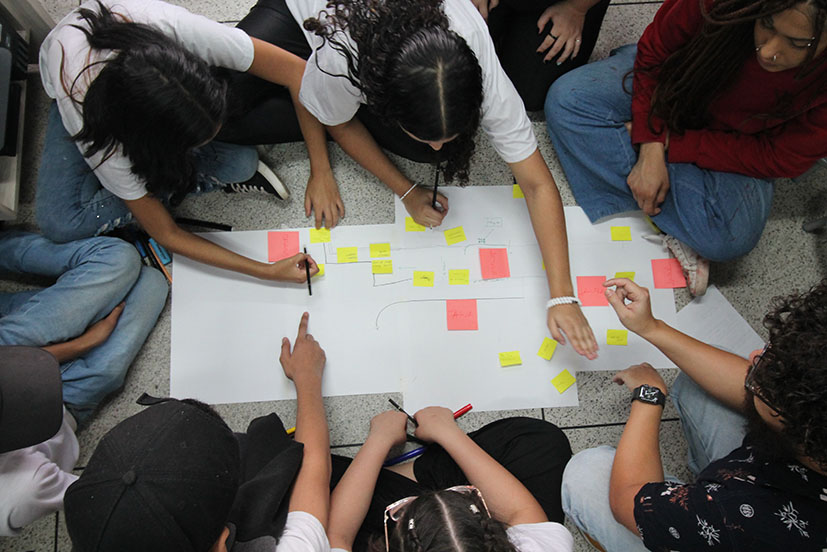
Architectural representation is not neutral. It carries values, power structures, and cultural hierarchies that often exclude non-hegemonic knowledges and non-hegemonic ways of thinking, producing, and inhabiting space. This article shifts the focus from built architecture to graphic representation systems, arguing that technical drawing, while necessary, complicates access toarchitecture for those unfamiliar with its codes. Based on a qualitative analysis of drawings produced by children and young people from a public school on the periphery of São Paulo, Brazil, the research contrasts the abstract, objective logic of technical drawing with the figural, subjective, and relational modes of representation found in students’ drawings. The theoretical framework draws on Bourdieu, Freire, Santos, Silva, Quijano, and Escobar to articulate how schools and universities reproduce cognitive and social exclusion through standardized graphic language patterns. The findings show that students’ drawings express spatial complexity, affective ties, and concerns with security, use, separation, and sharing of spaces, dimensions largely absent from conventional technical representation. The article concludes that rethinking drawing is a political task. A pedagogy of difference is necessary, one that includes multiple representation systems and questions the structures of value attribution, promoting dialogue between technical and popular knowledges, contributing to a more inclusive and democratic architectural education.
DOI: https://doi.org/10.20365/disegnarecon.36.2026.7
Keywords
Full Text:
PDFRefbacks
- There are currently no refbacks.
Copyright (c) 2026 Maria Isabel Imbrunito
DISEGNARECON
ISSN 1828 5961
Registration at L'Aquila Law Court no 3/15 on 29th June, 2015.
Indexed in SCOPUS. Diamond Open Access. All papers are subjected to double blind peer review process by qualified reviewers.
Journal founded by Roberto Mingucci