
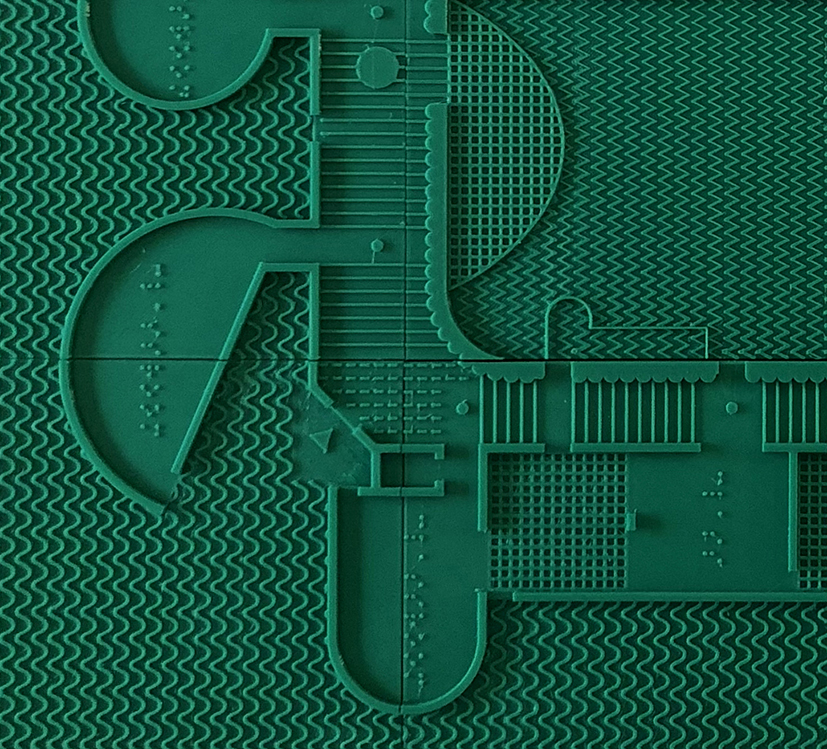
Multisensory Representation: Evolving Tools and Techniques for Conveying Diverse Sensory Spatial Experiences
Abstract
Sensory maps are increasingly used to support navigation of unfamiliar environments, particularly for individuals with sensory sensitivities or impairments. Typically rendered as simplified floor plans with color overlays and symbols, these maps help users anticipate conditions such as noise and light intensities, anticipated crowd densities, or temperature variations. Yet conventional sensory maps remain limited in their ability to convey the complexity, variability, and embodied subjectivity of lived sensory experience.
This paper argues that communicating diverse sensory spatial experiences requires expanded, multisensory approaches to architectural representation. Drawing on precedents from environmental mapping, atmospheric visualization, and architectural practice, it examines how designers have translated invisible qualitative and quantitative sensory phenomena into legible graphic forms. Case studies—including bioclimatic mapping, olfactory cartographies, infrared microclimate drawings, motion intensity heatmaps, and tactile models—demonstrate both the potential of these techniques and their limitations when produced from singular perspectives.
Emphasizing participatory practices, the paper analyzes representational tools developed with and by individuals with sensory impairments and sensitivities. Through interviews, sensory audits, tactile notational systems, and co-produced graphic artifacts, it shows how inclusive representation can extend architectural thinking beyond vision-centric norms. It concludes that multisensory representational tools created collaboratively with disability and neurodivergent communities not only enhance communication of sensed spatial conditions but also inform more inclusive design processes from the outset, reshaping how architecture is conceived, represented, and experienced.
DOI: https://doi.org/10.20365/disegnarecon.36.2026.10
Keywords
Full Text:
PDFRefbacks
- There are currently no refbacks.
Copyright (c) 2026 Katie Stranix
DISEGNARECON
ISSN 1828 5961
Registration at L'Aquila Law Court no 3/15 on 29th June, 2015.
Indexed in SCOPUS. Diamond Open Access. All papers are subjected to double blind peer review process by qualified reviewers.
Journal founded by Roberto Mingucci