
From Representation to Participation: Generative AI as a Catalyst for Collaborative Design of the Built Environment
Abstract
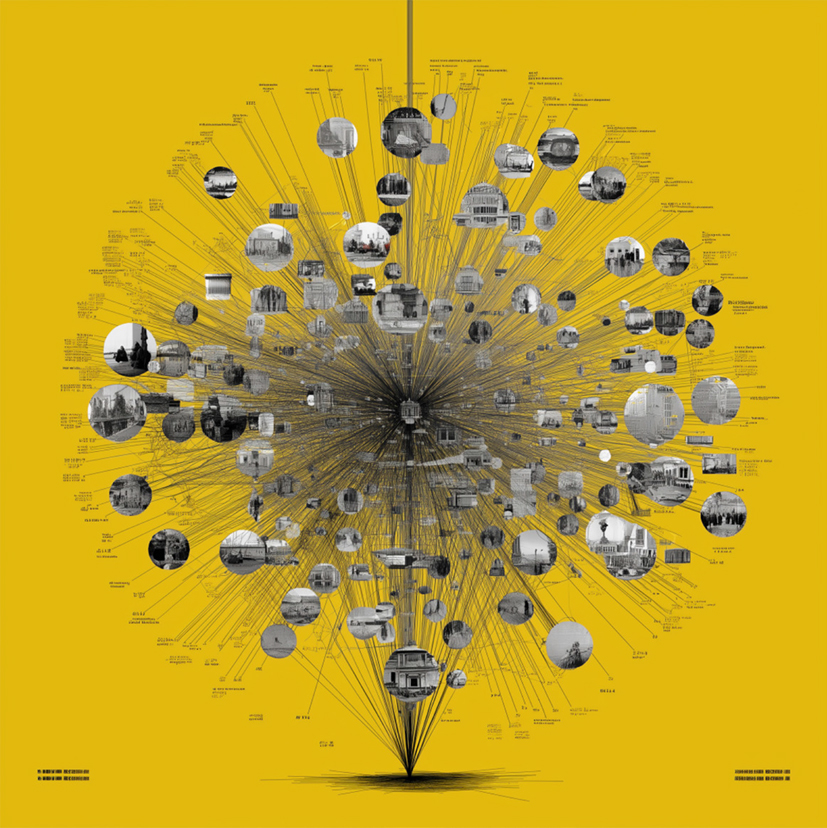
As the built environment across Europe and other regions continues to age, the challenge of adapting existing building stock to contemporary needs is becoming increasingly important. In this context, the necessity to manage and update lived spaces will intensify in both frequency and complexity. Participatory design may thus assume a central role in the management of the built landscape, offering a way to align spatial interventions with the lived realities, values, and expectations of local communities. However, one of the enduring challenges faced by participatory design is the risk of inadvertently excluding valuable contributions due to disparities in technical knowledge and design literacy. When non-professional users are invited to engage in participatory frameworks, the activities proposed must be carefully calibrated to match their skills. For instance, practical design tasks, such as generating or commenting on design proposals, must be accessible and meaningful, regardless the participant’s background. This paper explores generative AI (GENAI) as a tool able to foster a more inclusive participation within the participatory design framework. By lowering the technical threshold for engagement while preserving the richness of participant contributions, GenAI can help democratize the design process and reveal latent community values that might otherwise remain unspoken. This paper explores how GenAI, when embedded within a socio-technical framework encompassing tools such as natural-language interfaces, culturally fine-tuned adaptation, multi- modal fusion, and transparent governance, can significantly enhance participatory design. Rather than replacing expert judgment, GenAI serves as a mediator and amplifier of diverse perspectives, one that not only expands who can participate, but also deepens the quality and relevance of the resulting design outcomes.
DOI: https://doi.org/10.20365/disegnarecon.35.2025.15
Keywords
Full Text:
PDFRefbacks
- There are currently no refbacks.
Copyright (c) 2025 Lorenzo Ceccon, Matteo Cavaglià
DISEGNARECON
ISSN 1828 5961
Registration at L'Aquila Law Court no 3/15 on 29th June, 2015.
Indexed in SCOPUS. Diamond Open Access. All papers are subjected to double blind peer review process by qualified reviewers.
Journal founded by Roberto Mingucci