
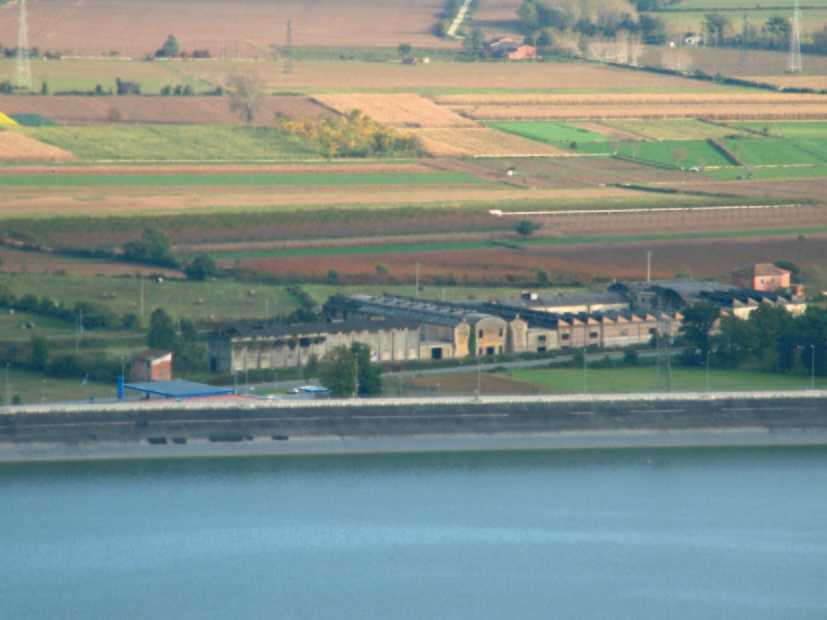
BIM federated model for the regeneration of industrial archaeology buildings. The case study of the Tobacco Factory in Presenzano
Abstract
This paper introduces a multidisciplinary research activity that connects the fields of drawing and structures, particularly focusing on an application in industrial archaeology. The study involved constructing the BIM model - based on geometric and structural survey data - of the Tobacco Factory in Presenzano decommissioned for over fifty years.
The aim of this paper is to build a BIM model that integrates geometric and dimensional information in the parametric modeler with data on the physical-mechanical characteristics of the materials and structures derived from experimental tests. The federated BIM model, which stands as an archive for the knowledge of a work and as a support tool for the project in all its phases, in the specific case of application to the field of industrial archaeology, is configured as a valuable aid to the simulation of the project. In particular, concerning the conditions in which the Tobacco Factory in Presenzano is located with largely col- lapsed volumes, the BIM model allows to hypothesize scenarios of structural and functional reuse of the building, in the specific spatial context that hosts it, the features of which were stored, in an ad- hoc structured GIS project, according to the well-established digital cartographic representation technique. The Tobacco Factory and its context were modeled from architectural t - graphic scale using BIM to GIS procedures.
DOI: https://doi.org/10.20365/disegnarecon.35.2025.18
Keywords
Full Text:
PDFRefbacks
- There are currently no refbacks.
Copyright (c) 2025 Nicola Pisacane, Alessandra Avella, Mariateresa Guadagnuolo
DISEGNARECON
ISSN 1828 5961
Registration at L'Aquila Law Court no 3/15 on 29th June, 2015.
Indexed in SCOPUS. Diamond Open Access. All papers are subjected to double blind peer review process by qualified reviewers.
Journal founded by Roberto Mingucci